
How to figure out the best order to declutter your home based on your own emotional blocks
Okay, can we talk about decluttering advice for a second? Because so much of it tells you to start with your wardrobe, and honestly, I think that's where a lot of people set themselves up to fail.
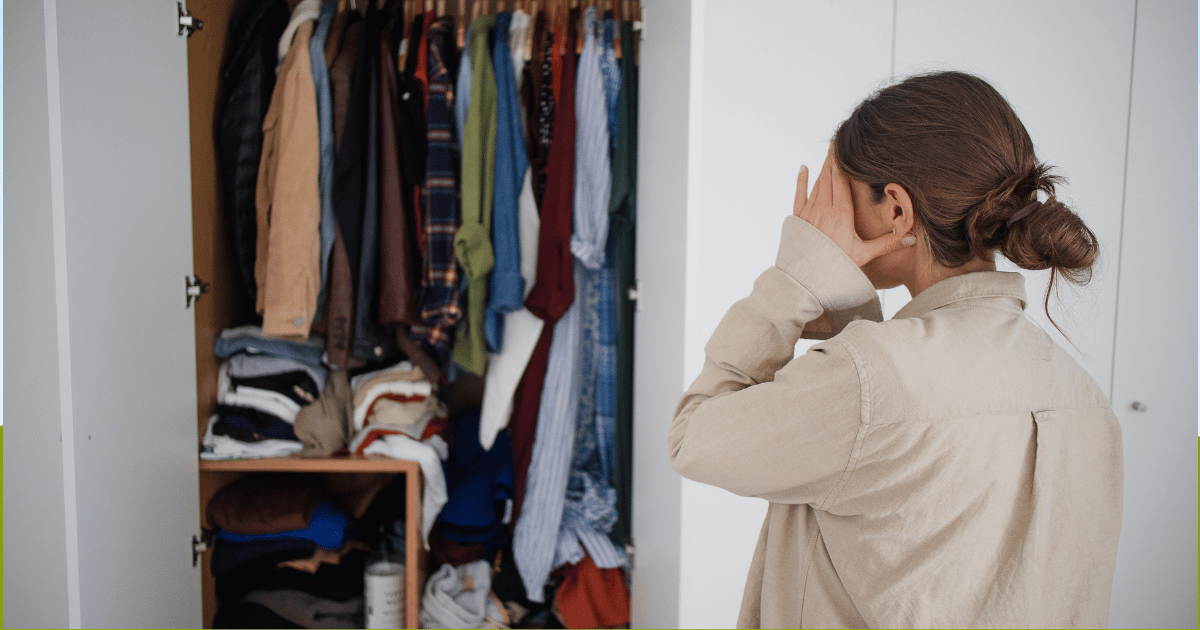
You know the feeling, you start full of energy, you're two hours into a pile of jumpers you "might wear again," and by the end you're just shoving things back in the drawer because you can't face one more decision. If that's happened to you, please don't take it as a sign you're bad at this. It usually just means you maybe started in the wrong place.
Here's the thing nobody tells you: the order you declutter in matters almost as much as the decisions themselves. Get the order right, and you can get through a lot. Get it wrong, and you might not get past the first box.
Why the Order Actually Matters
Every single decision you make while decluttering - keep, donate, bin, "I'll deal with it later" all uses up a bit of mental energy. It doesn't feel like much in the moment, but it adds up fast. That's why you can start a session feeling completely on it, and an hour later you're saying "just keep it" to everything, even things you know you don't actually want.
That's decision fatigue, and it's honestly the biggest reason decluttering projects stall out. So, the goal isn't just "get organised", it's about protecting your energy for as long as possible, so you don't run out of steam before you run out of stuff.
So, What's the Right Order?
Here's roughly how I'd suggest working through it, but keep reading, because the next section matters just as much as this one.
Start with the genuinely easy stuff – for you! Think kitchen junk drawer, bathroom cabinet, that shelf of old chargers nobody remembers the use for. Quick decisions, low stakes, no feelings involved. This isn't about being efficient for the sake of it, it's really about getting a few wins under your belt before you touch anything trickier. What would be the easy stuff for you?
Then ease your way into the medium stuff. More volume, but still fairly low-emotion for most people, kitchenware, general clothes, books you're not attached to. You'll hit the odd tricky item, but most calls will still be fast.
Save your true blockers for last. More on this in a second.
Your Blocks Aren't the Same as Anyone Else's
Most advice treats categories like they're universally easy or hard, clothes are "medium," photos are "hard," and so on. But that's not really how it works, because everyone's blocks are different.
Some people can breeze through clothes without a second thought but completely freeze up on books, because books feel like part of their identity. Someone else might feel nothing about parting with books but well up over a box of old birthday cards. There's no universal order, there's just your order, based on what actually trips you up.
So, before you start, it's worth being honest with yourself about which categories are simple for you and which ones make you feel anxious. Not what "should" be hard according to some blog (including this one), what's actually hard for you?. That's the category you save for last, once you've flexed that muscle and built up some momentum and confidence.
A Word on Paperwork
I'll be honest, paperwork tends to be the one most really struggle with, and it catches people off guard because it doesn't seem like it should be. There's nothing sentimental about a pile of old bank statements, so why does it feel so heavy?
It's because paperwork demands a different kind of effort. It's not emotional, it's administrative, you have to actually read things, make decisions about what might matter later, and often chase down information you don't have on hand. That's a completely different kind of tiring, and it can drain you just as fast as anything sentimental.
My advice: don't try to slot it in alongside everything else. Paperwork isn't really a stop on the same journey as your wardrobe or your kitchen cupboards, it's its own category entirely, and honestly, it deserves to be treated as its own mini-project. Set aside dedicated time for it, away from the rest of the declutter, so you're not trying to switch between emotional decisions and administrative ones in the same session.
Why Starting With Your "Hard" Category Backfires
It feels responsible to get the hardest thing out of the way first, right? But it usually works against you. If you start with your biggest emotional block, you're making your toughest calls at the exact moment your guard is still fully up and you haven't had any wins yet to build confidence. It's a bit like starting a workout with your heaviest lift before you've warmed up.
I see this a lot with clients, someone opens with a box of old photos "to just get it over with," spends ninety minutes on ten items, and closes the lid feeling like the whole project is too much. It was never about them not being capable. It was just the wrong starting point.
A Quick Example
I worked with a client who was adamant about starting with her bookshelves, because "it's just books, how hard can it be?" Turned out books were actually her biggest block, every title reminded her of a time in her life she wasn't ready to let go of. An hour in, she'd moved about a dozen books and was completely drained. We switched gears, started with her kitchen and airing cupboard instead, and came back to the books in our next session. Same person, same books, but with a bit of momentum behind her, she got through the whole shelf in less time than that first hour had taken.
The Takeaway
Decluttering is really just a long series of decisions, and constant decision making can be exhausting. So be a bit strategic about it, start easy, build some momentum and you will start to feel empowered. Figure out what your actual blocks are rather than assuming they're the same as everyone else's. Save those for when you've got the clear head (and the patience) they deserve.
If you're about to start a project of your own, take a minute first to map out your rooms and categories from easiest to hardest, your version of easiest to hardest, not the textbook one, before you dive in wherever will give you the biggest wins for the least effort.
Not sure where your blocks are, or stuck partway through a project already? [Get in touch] and let's figure out a plan that actually works for you and only you!