
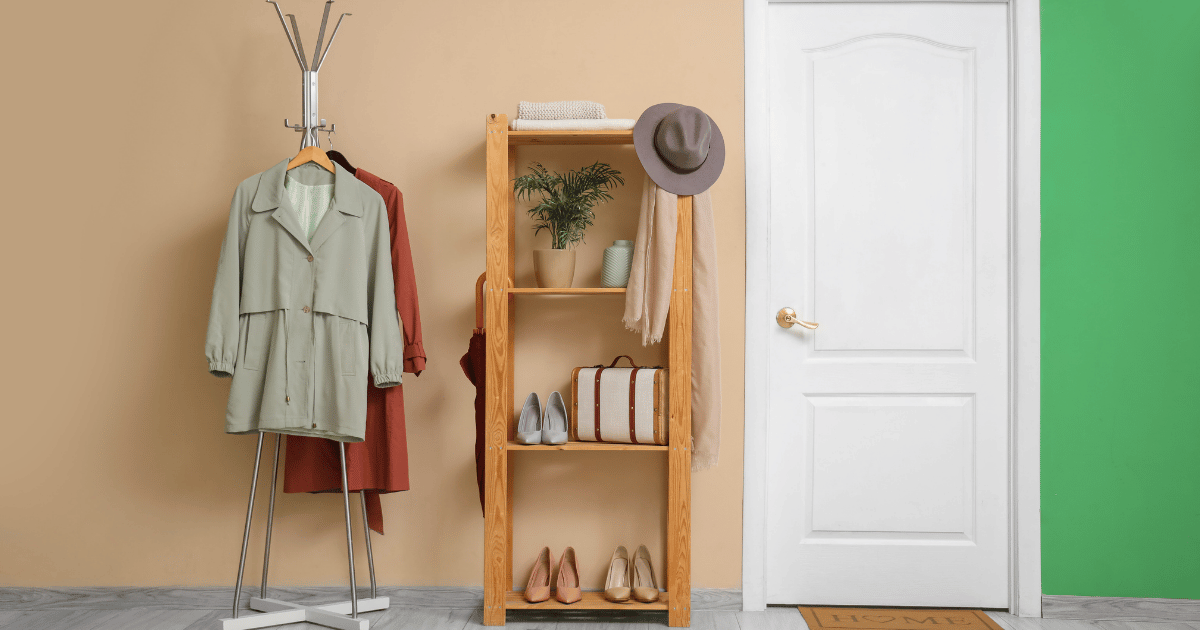
Okay, let's talk about the advice that gets thrown around more than almost any other tidying tip: "a place for everything, and everything in its place."
I get it. It sounds lovely. It sounds like the whole answer, tied up in a neat little bow. And if you've got an ADHD brain and you've tried it, genuinely tried it, not just half-heartedly and it's fallen apart within about four days, I need you to hear this loud and clear: that's not on you.
As someone who spends my working life in other people's homes helping them get organised, I can tell you this is one of the most common things I see. Someone's beating themselves up over a "failed" system that was never actually built for their brain in the first place.
Here's the bit nobody tells you
Most organising advice quietly assumes you've got a certain kind of mental machinery running in the background. The bit of your brain that plans ahead, remembers where you've put things, and follows a task through to the finish even when there's no reward for doing it. That's your executive function, and it's the same system that's meant to get you to move the washing from the machine to the dryer before it starts smelling a bit funky.
ADHD brains don't have reliable, consistent access to that system. That's not a discipline issue. It's not a "just try harder" issue. It's a genuine difference in how the brain manages attention, working memory, and follow-through. It means a labelled drawer with a lid on it isn't a simple storage solution. It's a mini obstacle course; every single time you want a pair of scissors.
Closed storage is honestly the worst culprit. Any drawer, cupboard, or lidded box asks you to remember it exists, choose to open it, get the item out, and then, crucially, choose to put it back inside rather than just leaving it on the nearest surface. Do that for every object in your home and, well... you can see how the piles happen.
And "out of sight, out of mind"? For a lot of ADHD brains, that's not a cute saying, it's basically what happens. If you can't see something, there's a real chance you'll forget it's there entirely. Not because you don't care. Because your brain isn't wired to keep tabs on things it can't currently see.
So, let's flip it
Here's the reframe I use with every single client: stop organising for the person you wish you were and start organising for the person who's actually going to walk through that front door tonight, tired, bag still on their shoulder, keys in hand.
That person is not sorting the post into three neat piles. They're not going to open a cupboard, find the right box, and place an item inside it with care. They're going to do the easiest possible thing with whatever's in their hands and whatever that easiest thing is, that IS your system, whether you meant it to be or not.
So, the question isn't "where should this live?" It's "where does this actually end up?" Once you know that, you build the storage around the honest answer, not the aspirational one.
This isn't about lowering the bar. It's about closing the gap between "the tidy option" and "the easy option" until they're the same option.
The swaps that actually work
Here's what I put into practice with clients, over and over:
- Open baskets, not drawers. If you can see it, your miles more likely to use it AND put it back. Ditch the closed drawer for an open basket or tray, especially for the stuff you reach for daily.
- Landing zones instead of "proper homes." Keys, wallet, headphones, the post, give them one obvious catch-all spot near the door, not a designated home three rooms away. Work with the habit of dropping things, don't fight it.
- Fewer steps between using it and putting it back. Every extra step, a door, a lid, an obstacle, a walk to another room, is another chance for the task to just... not happen. Literally count the steps in your current setup and see what you can cut.
- Group things by how you use them, not by what they technically are. Scissors live in the kitchen AND the office if that's genuinely where your hand reaches.
- Keep "away" visible. If a system only works when everything's hidden, it's working against your brain, not with it.
None of this is "being messier." It's removing the friction that turns a two-second job into a full decision-making event, fifty times a day.
Let's build a space that works for you
If you've bought the baskets, watched the videos, and still ended up back at square one, please hear me: that's not a personal failing. It's a sign the system wasn't designed with your brain in mind. And that's exactly what I can help with, I coach clients to understand themselves better.
I offer an ADHD-friendly home assessment — a practical, zero-judgement look at how you actually live in your space, so we can build systems that work with you instead of against you. If that sounds like what you need, [get in touch and let's book you in].